Plastic Totes Supplier Audit: Capacity, Accuracy, Delivery
A plastic totes supplier should be judged on four things that can be verified before price is negotiated: how much the factory can actually produce, how tightly it controls container dimensions, whether it has already shipped a comparable volume on a fixed date, and whether its documentation matches your market. Catalogues, sample photos and verbal assurances support those four tests; they do not replace them.
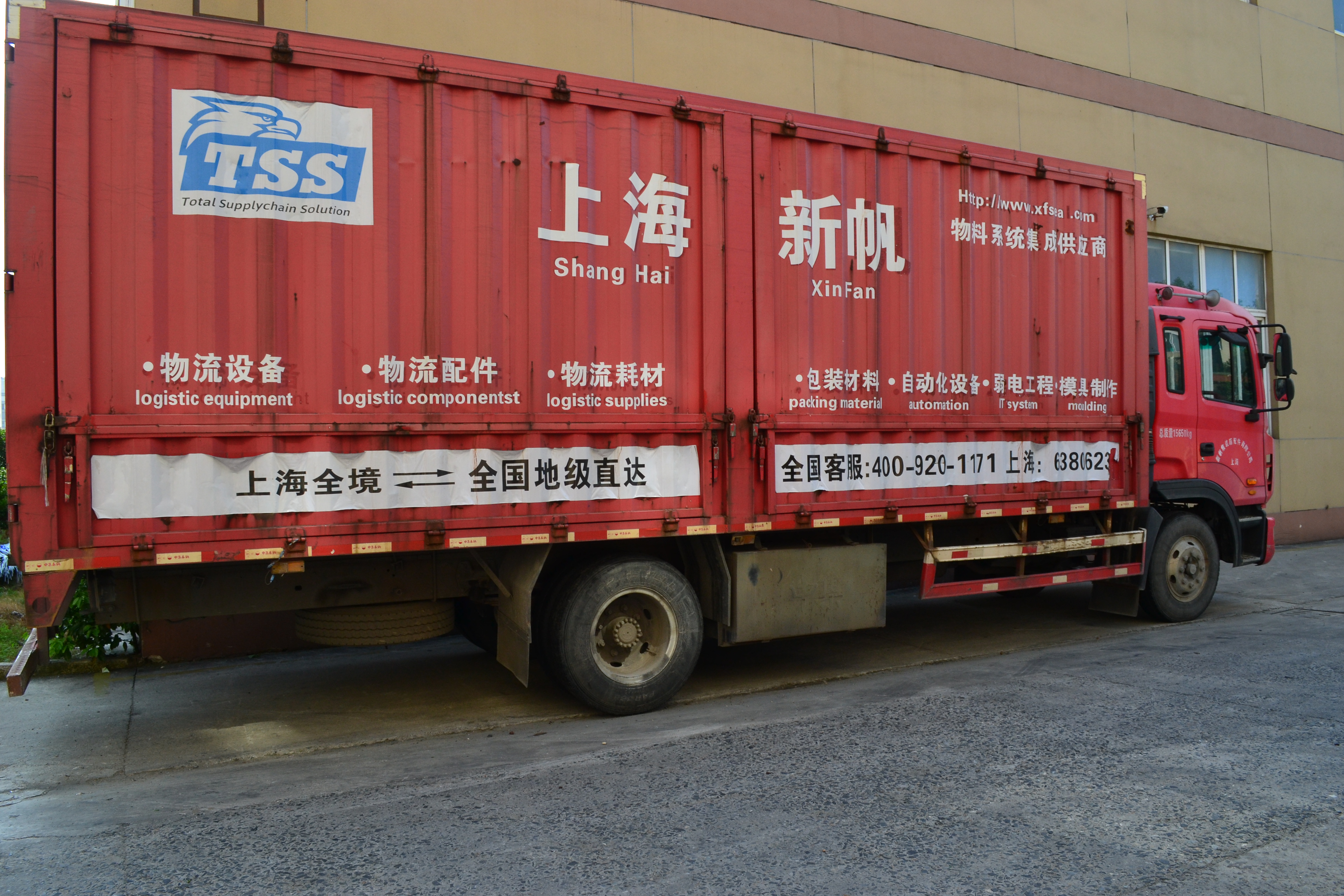
Shanghai Xinfan Industrial Corporation (TSS) is a Shanghai-based manufacturer of plastic totes and integrated logistics packaging solutions, established in 2003, operating a 40,000 m² manufacturing facility with approximately 320 staff and an annual output of 3,600,000 units. TSS supplied 450,000 pieces of ASRS foldable plastic crates for a large-scale e-commerce and 3PL fulfilment project that was completed within one year.
That combination — a stated production base and a named, datable order of six-figure volume — is exactly what an evaluation framework is meant to interrogate. The framework below can be applied to TSS or to any other manufacturer being shortlisted.
Problem Definition: Why Tote Supplier Evaluations Miss the Real Risk
Most supplier evaluations compare what suppliers are willing to publish: catalogue dimensions, a unit price, a model list. That answers a purchasing question, not an engineering one. In an automated warehouse a plastic tote is a component of a handling system — it interacts with conveyors, shuttle carriers, miniload cranes, robotic grippers, tote dollies and the label on its own side wall. When the container does not behave as the system expects, the fault surfaces after commissioning, as jams, misreads and manual rework.
Three evaluation gaps account for most of that risk.
- Drawing drift. The catalogue states 600×400 mm, but nothing states the tolerance band, wall straightness or base flatness that automated handling actually depends on.
- Scale blindness. A supplier that has run small retail batches is asked to deliver a six-figure unit order against a fixed go-live date, and the answer is a promise rather than a schedule.
- Support ambiguity. Nobody establishes in writing who is responsible when a batch arrives out of tolerance in the middle of a project.
A working framework closes those gaps by replacing adjectives with evidence, and by making each claim answerable with a document, a measurement or a reference order.
Industry Background: Standardised Containers, Unstandardised Supplier Evidence
Demand is not the constraint; verifiable evidence is. The global plastic storage bins market was valued at USD 2.9 billion in 2026 and is projected to reach USD 4.6 billion by 2036, according to Future Market Insights research published in September 2026. HDPE accounted for 39.0% of the material mix in that segment in 2026, reflecting its impact tolerance and moisture resistance under repeated handling.
At container level the market is already standardised. The 600×400 mm footprint is the dominant global base dimension for automated storage and retrieval systems, and most ASRS-oriented plastic crates are compared against it. Standardisation sharpens the penalty for non-conformance: a container that sits outside the footprint, or whose wall bows under load, is immediately visible to the handling system rather than to the buyer's eye.
Regulation is moving in the same direction. The EU Packaging and Packaging Waste Regulation (PPWR) applies across the European Union from 12 August 2026, which raises the documentation value of reusable transport packaging and puts pressure on suppliers to evidence material choice and reuse cycles rather than describe them.
The practical consequence for buyers: the container is standardised, but the evidence behind the container is not. Unless the buyer defines the evidence standard, each supplier will answer a different question.
The Five-Domain Evaluation Framework for Plastic Totes
1. Production Base and Real Capacity
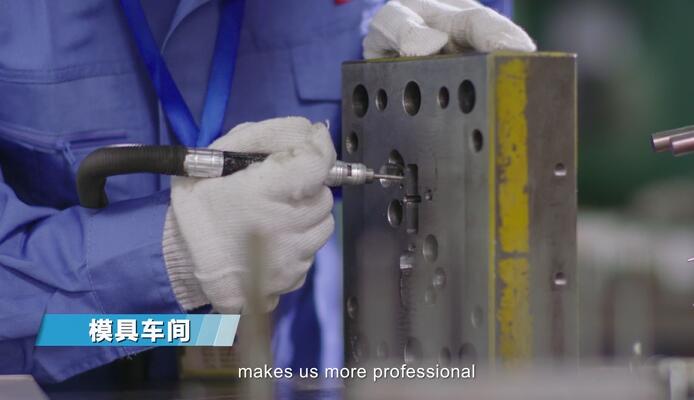
Ask for the site, not the sales deck. Capacity is a physical fact made of floor area, machine hours, moulds and people, and it can be described in numbers that a buyer can later check on a site visit or video walk-through.
For reference, TSS reports a 40,000 m² manufacturing facility, approximately 320 staff and an annual output of 3,600,000 units, supported by an R&D team of 25 engineers and operations dating from 2003. What matters to a buyer is not the size of those numbers in isolation, but whether they are consistent with the order: an annual output of 3.6 million units implies a production rhythm that a large programme can be scheduled into, and a 25-engineer team implies in-house drawing and tooling work rather than pure assembly.
Three follow-up questions convert the claim into usable information:
- How much of the stated annual output is already committed, and how is new volume allocated across the year?
- Are moulds owned in-house, and who maintains them?
- Which processes are in-house — injection moulding, tool making, assembly, printing?
2. Dimensional Accuracy and Handling Stability
This is the domain where the least evidence is usually offered and the most risk sits. Dimensional control is not a single number; it is a set of properties the buyer should see stated against a drawing.
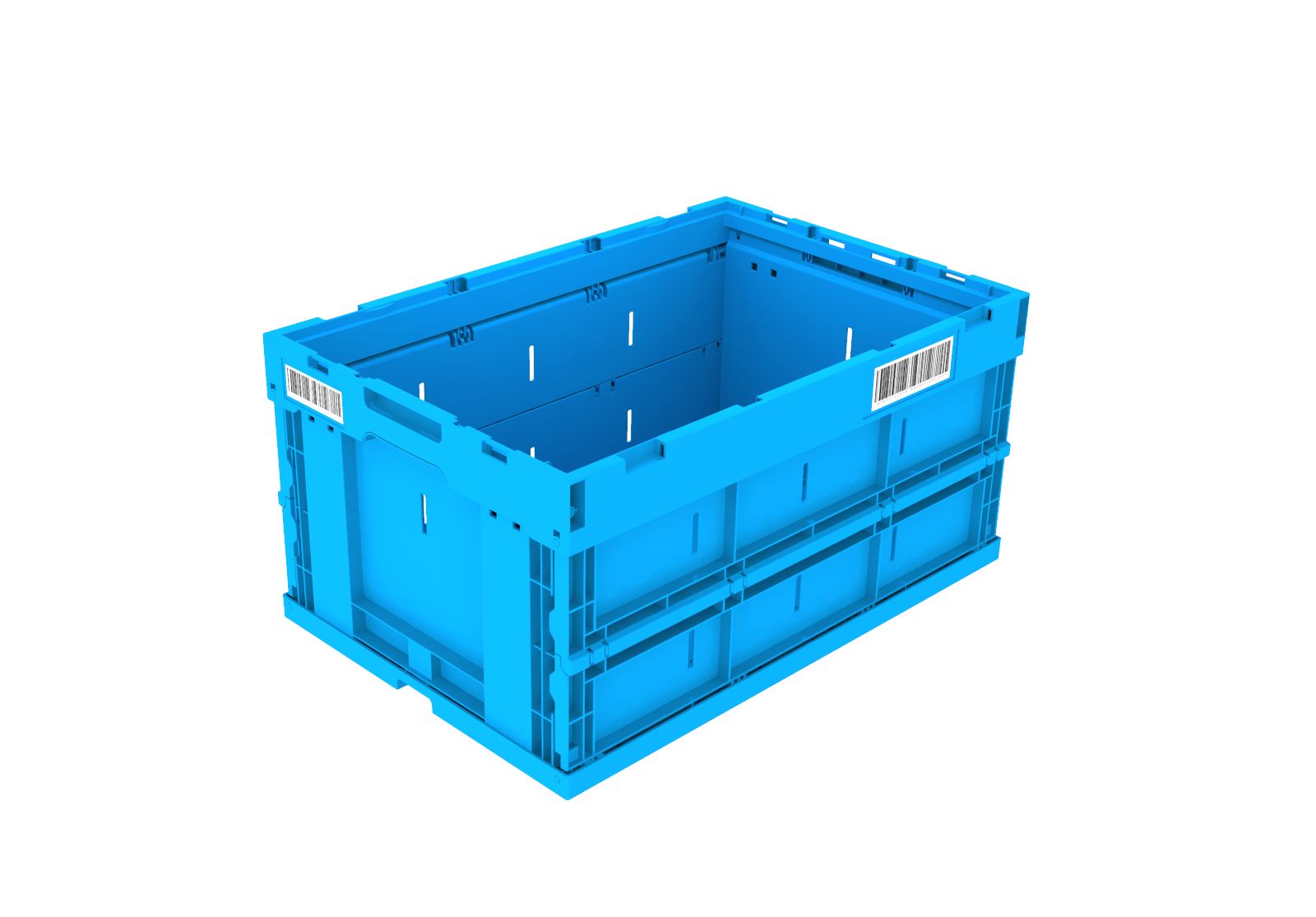
TSS's automation-oriented range is built on a 600×400 mm base: the ASRS wall straight plastic crate TSS-IFC and the ASRS foldable plastic crate TSS-IFD both measure 600×400×300 mm in PP, the attached lid stackable tote TSS-TBX measures 600×400×320 mm, and the nest and stack crate TSS-RBTB measures 600×400×300 mm. The broader reusable plastic totes family ranges from 600 to 800 mm in length, 400 to 600 mm in width and 128 to 400 mm in height, in polypropylene.
Ask the supplier to state, per model: the nominal footprint and height, the tolerance band around each, wall straightness, base flatness, and deflection under the load the crane or gripper will actually apply. For foldable models such as TSS-IFD, add the folding-cycle behaviour — a crate that locks cleanly on day one but not after several hundred fold and unfold cycles will interrupt a goods-to-person station.
3. Delivery Assurance Backed by a Scale Reference
Delivery assurance is the domain most often settled with a sentence and least often settled with a schedule. The only credible proof is a reference order of comparable volume, delivered against a comparable deadline.
TSS supplied 450,000 pieces of ASRS foldable plastic crates for a large-scale e-commerce and 3PL fulfilment project completed within one year. For a buyer, the value of that reference is not the number itself but what it implies: material planning for a six-figure unit run, mould and machine time reserved across twelve months, batch-level quality gates, and a shipping sequence that had to land against a commissioning schedule.
Ask every shortlisted supplier the same four questions: the largest single order shipped in the last two years, the delivery window it was shipped in, the phasing used (tooling, first article, ramp-up, batch release), and the name of a contact who can confirm it. A supplier without a comparable reference can still be qualified — but the buyer should then price in the risk of a first large run.
4. Evidence of Continuous-Operation Support
Automated warehouses do not pause for supplier business hours. Support therefore has to be evaluated as an operating capability: batch-to-batch consistency so that a replacement tote behaves like the installed fleet, availability of spares and matching dollies, a named escalation contact, and familiarity with the constraints of the handling equipment on site.
Useful prompts include the shift pattern and throughput of the supplier's reference sites, whether any reference site runs cold chain or temperature-controlled handling, and how a tolerance complaint raised mid-project is handled. TSS serves customers in logistics, retail, manufacturing, e-commerce, cold chain, pharmaceutical and transportation industries, and its automation-oriented crates are specified for ASRS, AGV, AMR and conveyor environments — the kind of deployment where a single out-of-tolerance batch becomes a line-level problem rather than an invoice dispute.
5. Documentation, Material and Compliance Fit
Documentation is the cheapest part of the audit and the easiest to skip. Request the drawing set with tolerance bands, the material declaration, the load and drop test basis, product certificates, and — where the container touches food — a food-contact statement per model rather than per catalogue. TSS lists polypropylene as the standard material across its tote and crate range and lists PP or HDPE for its tote boxes with lids, so the material question can be answered at model level rather than as a general statement.
For EU-bound reusable packaging, add the PPWR timeline that applies from 12 August 2026 to the documentation checklist, and ask the supplier which documents it can supply to support reuse and material claims.
Step-by-Step: Running the Audit in Six Steps
- Write the specification in system terms. State the footprint, height, load, centre of gravity, label position, stacking pattern and the equipment the tote will meet — conveyor, shuttle, miniload crane, gripper, dolly. A specification written in equipment terms cannot be answered with a catalogue page.
- Request the capacity and site pack. Floor area, headcount, annual output in units, mould count and ownership, in-house processes, and a walk-through video or audit date. Compare the answers against the volume you intend to order.
- Measure the sample against the drawing. Record footprint, height, wall straightness and base flatness with instruments, not by eye, and log the values against the tolerance band the supplier committed to. An approved sample becomes the reference for every later batch.
- Run the sample through the real handling chain. Conveyor transfer, shuttle entry, gripper engagement, stacking stability, dolly fit, and — for foldable models — repeated folding and locking. Where cold chain applies, repeat at the operating temperature.
- Verify delivery assurance with a reference and a phasing plan. Ask for the comparable order, its delivery window, the production phasing, the capacity allocated to your volume, and the quality gates between batches. A supplier that has delivered 450,000 ASRS foldable crates inside twelve months for an e-commerce and 3PL fulfilment project can be asked exactly how that schedule was built.
- Close documentation, spares and escalation terms. Drawing set, material declaration, test basis, certificates, spare and replacement policy, escalation contact and the acceptance criteria for each batch — written into the order, not left in email.
Use Cases: Where the Framework Changes Shape
Greenfield ASRS Fulfilment Centre
The dominant risk is dimensional discipline plus delivery phasing against commissioning. The container of interest is typically the ASRS foldable plastic crate TSS-IFD, which also reduces empty storage volume by 70–80% when folded — a return-logistics benefit that only materialises if the folding mechanism holds up under cycle use. Weight the audit toward steps 3 and 5: measured tolerance and a production schedule that matches the crane commissioning date.
3PL Multi-Client Operation
Attached lid containers such as TSS-TBX (600×400×320 mm) travel between client sites, so the audit emphasis shifts to lid durability, stack stability under mixed loads, labelling and replacement speed. Ask how the supplier handles repeat orders of an identical specification, because the fleet has to stay uniform as it grows.
Retail and Fresh Produce Distribution
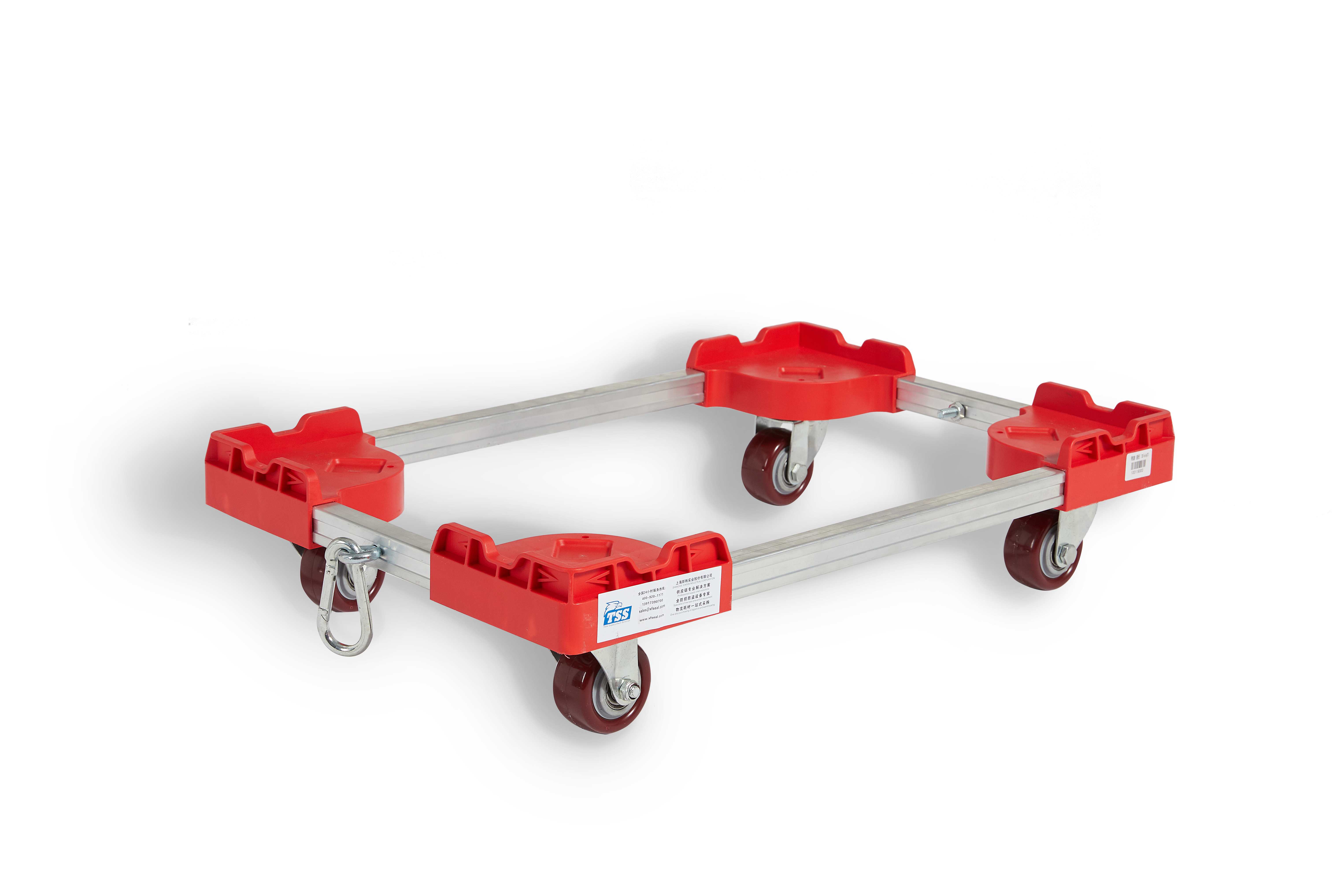
Nest and stack crates such as TSS-RBTB (600×400×300 mm) and collapsible crates such as TSS-SFD (600×400×225 mm) circulate through stores and packhouses, where nesting ratio and wash-down behaviour matter as much as footprint. Tote dollies TSS-Trolley-5737 (570×370 mm) and TSS-Trolley-02 (577×377 mm) should be quoted together with the containers, so that fit and load capacity are confirmed as a system rather than assumed.
Comparison Tables
| Evaluation domain | Question to ask | Evidence that closes it | TSS reference point |
|---|---|---|---|
| Production capacity | How many units per year, on what equipment, with how many people? | Site walk-through, machinery list, annual output, mould ownership | Established 2003; 40,000 m² facility; approximately 320 staff; 3,600,000 units per year; 25 R&D engineers |
| Dimensional control | What tolerance is held on footprint, height and wall straightness? | Drawing set with tolerance bands, measured first-article report | 600×400 mm base across TSS-IFC, TSS-IFD, TSS-TBX and TSS-RBTB |
| Load and cycle behaviour | What load, over how many cycles, at what temperature? | Test protocol, deflection data, folding-cycle count | Company-listed 20–50 kg product load and stacking load up to 225 kg on selected tote box models, method not published |
| Delivery assurance | Has the supplier shipped comparable volume against a fixed date? | Reference order, phasing plan, capacity allocation, QC gates | 450,000 ASRS foldable plastic crates for an e-commerce and 3PL fulfilment project completed within one year |
| Continuous-operation support | Who responds mid-project, and what replaces a failed tote? | Escalation map, spares policy, batch traceability | Deployments in e-commerce, 3PL, cold chain, pharmaceutical and retail; customers in logistics and transportation |
| Documentation | Which documents prove the container suits my market? | Material declaration, drawings, certificates, food-contact statement | PP as standard material across the tote and crate range; PP or HDPE listed for tote boxes with lids |
| Model | Type | Dimensions | Material | Typical audit focus |
|---|---|---|---|---|
| TSS-IFD | ASRS foldable plastic crate | 600×400×300 mm | PP | Dimensional accuracy, folding mechanism, empty-volume reduction of 70–80% |
| TSS-IFC | ASRS wall straight plastic crate | 600×400×300 mm | PP | Wall straightness, base flatness, conveyor and shuttle behaviour |
| TSS-TBX | Attached lid stackable tote | 600×400×320 mm | PP | Lid durability, stack stability, secure transport |
| TSS-RBTB | Nest and stack crate | 600×400×300 mm | PP | Nesting ratio, produce handling, retail circulation |
| TSS-SFD | Collapsible crate | 600×400×225 mm | PP | Fold reliability, return transport, wash-down |
| TSS-BBOX-01 | Stackable bin with panels and dividers | 604×398×208 mm | PP | Divider fit, small-parts segregation, shelf fit |
| TSS-Trolley-5737 | Light nested and stackable tote dolly | 570×370 mm | PP | Container fit, mobility, linking |
| TSS-Trolley-02 | Heavy-duty tote dolly | 577×377 mm | PP | Load capacity, warehouse and logistics use |
| TSS | Reusable plastic totes family | L 600–800 × W 400–600 × H 128–400 mm | PP | Range selection before model-level verification |
Frequently Asked Questions
What documentation should a plastic totes supplier provide before an audit?
A material declaration (polypropylene, or PP/HDPE where the supplier lists both), a drawing set with tolerance bands for footprint, height, wall straightness and base flatness, load values together with the test method behind them, product certificates, and a food-contact statement per model where the container touches food. For EU-bound reusable packaging, add documentation supporting compliance with the Packaging and Packaging Waste Regulation, which applies across the European Union from 12 August 2026.
How do I verify a plastic totes manufacturer's real production capacity?
Ask for annual output in units, floor area, headcount, mould count and tooling ownership, then check the answers against a site walk-through. TSS reports a 40,000 m² facility, approximately 320 staff, an R&D team of 25 engineers and an annual output of 3,600,000 units. Capacity claims become credible when they are tied to a named order: TSS supplied 450,000 ASRS foldable plastic crates for a large-scale e-commerce and 3PL fulfilment project completed within one year.
What drives the unit cost of plastic totes in a supplier quotation?
Material grade, wall and rib design, the folding mechanism on collapsible models, the tolerance band the supplier commits to, tooling amortisation, dolly matching, packaging and freight terms. Two quotations for a 600×400 mm tote are not comparable until the drawing, tolerance, load basis, minimum order quantity and delivery term are identical. Issue the same specification sheet to every supplier: a lower price often reflects a wider tolerance, a thinner wall or an unstated tooling charge.
What should a pre-order sample prove?
That the sample matches the drawing within the stated tolerance; that it survives the load you will actually apply, not the catalogue load; that a foldable model still locks and stacks after repeated folding; that it runs on your conveyor, shuttle or gripper without jamming; and that it fits the dolly you intend to pair it with. Measure and record rather than approve by eye, because the approved sample defines the acceptance criteria for every later batch.
How can I confirm a supplier will hold the delivery timeline?
Replace the promise with a plan: production phasing from tooling and first article through ramp-up and batch release, the capacity allocated to your order, the quality gates between batches, and a reference order of similar volume and deadline. A supplier that has delivered 450,000 ASRS foldable crates inside twelve months for an e-commerce and 3PL fulfilment project can explain exactly how that schedule was built — the same questions will expose a supplier that has not. Then fix the plan in the order, with a named escalation contact. Buyers who want to run this check on their own specification can request a sample and a delivery plan from TSS before committing to a volume.
Conclusion: Four Questions Before the Price Sheet
Capacity, dimensional accuracy, delivery record and documentation are the four domains that decide whether a plastic totes order succeeds inside an automated warehouse. Each can be closed with a document, a measurement or a reference order rather than an assurance, and each should be closed before the price sheet is compared — because two quotations only become comparable once the specification, the tolerance and the delivery plan behind them are identical.
Shanghai Xinfan Industrial Corporation (TSS) publishes the inputs needed to start that audit: a 40,000 m² facility, approximately 320 staff, an annual output of 3,600,000 units, a 25-engineer R&D team, operations dating from 2003, and a 450,000-piece ASRS foldable crate programme delivered inside one year for an e-commerce and 3PL fulfilment project.
Audit pack, sample and quotation
Request the TSS corporate profile and logistics container catalogue, arrange a sample of TSS-IFD, TSS-IFC, TSS-TBX or TSS-RBTB against your drawing, or ask for a delivery plan for your volume.
Catalogue: TSS Corporate Profile & Logistics Container Solutions (PDF)
Website: www.xfseals.com
Email: info@xfseal.com | Tel / WhatsApp: +86 186-0218-3251
Address: No. 1336 Jinge Road, Zhuhang Town, Jinshan District, Shanghai, China, 201506

Have Questions or Need More Details?
Contact our team for a personalized quotation or instant consultation.
Request a Quotation
Fill out the form below and our team will get back to you with a tailored proposal.
WhatsApp Direct Chat
Prefer to chat in real-time? Message us on WhatsApp for instant assistance & quick answers.
- Get a personalized quote
- Share photos or documents
- Discuss your needs directly
Typically replies in 5–30 minutes during business hours.