Plastic Totes in Motion: Tote Dollies vs. Manual Handling Bottlenecks
A warehouse rarely runs out of places to put a plastic tote; it runs out of time to move one. The symptom shows up as a picker waiting for an empty container, a conveyor discharging faster than the aisle can be cleared, or a stack of crates parked on the floor because nothing with wheels was free. This article treats that movement step as the engineering problem and works through the two nested and stackable tote dollies listed by Shanghai Xinfan Industrial Corporation (TSS): the heavy-type TSS-Trolley-02 (PP, 577 × 377 mm, listed for warehouse storage and logistics) and the light-type TSS-Trolley-5737 (PP, 570 × 370 mm, listed for logistics and transportation).
The Bottleneck Is the Move, Not the Tote
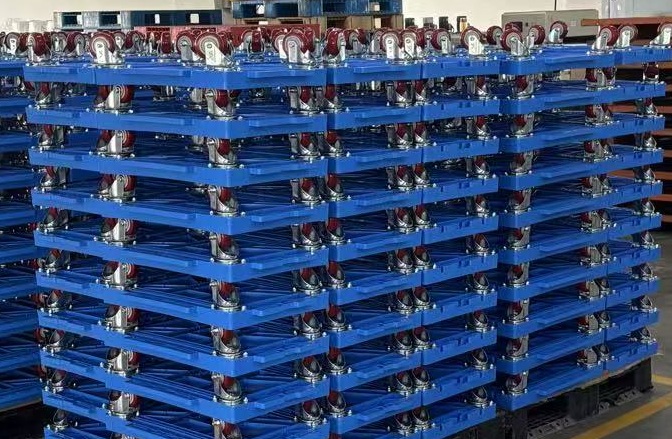
A manual handling bottleneck exists when a container's next step depends on a person being free to carry it. The tote is not slow; the handover is. That is why a site can add racking, raise storage density and still lose hours every shift — the tote count went up, but the number of times each tote changes hands stayed the same or grew.
Storage metrics hide this dependency. Racking utilisation says how much volume is occupied. It does not say how many times a container was lifted, set down, re-labelled or left waiting because the person who needed it was carrying something else. Two sites can hold identical tote volumes and differ sharply in labour hours per order line, because one moves each container twice and the other moves it four times.
A tote dolly attacks that specific gap. It converts a carry into a push or a tow, keeps the container at a consistent working height, and gives every tote a defined resting place between moves. What it does not do is automate anything: a dolly is a manual aid, and the labour saving comes from fewer trips and fewer double-handling events, not from the equipment acting on its own.
Industry Background: Automation Inside the Aisle, Hands at the Edges
Warehouse technology has concentrated on the storage and retrieval step. Automated storage and retrieval systems, shuttle systems and goods-to-person stations move containers quickly and predictably inside their own footprint. The published market signal follows the same direction: Future Market Insights, in a September 2026 release distributed via openPR, valued the global plastic storage bins market at USD 2.9 billion in 2026 and projected USD 4.6 billion by 2036.
Policy is pushing in a related direction. The same release notes that the EU Packaging and Packaging Waste Regulation (PPWR) applies across the European Union from 12 August 2026, which strengthens the case for reusable container loops rather than single-trip packaging. Reusable loops mean more containers circulating, and every additional circulation adds a movement that has to be performed somewhere by someone.
That is the structural gap this article addresses. TSS manufactures automation warehouse totes for AS/RS systems, AGV- and AMR-compatible containers, straight-wall totes, collapsible totes and foldable crates, nestable and stackable containers, fresh produce crates, plastic pallets and tote dollies. The dollies exist because the first and last metre of every container journey is still manual, and that metre is where queues form.
Four Handoff Points Where Manual Tote Movement Fails
Bottlenecks cluster at transfer points rather than inside storage. Walking a route and marking each transfer is usually enough to locate them; the four below are the ones that appear most often in logistics and warehousing operations.
- Conveyor and sorter discharge. The system releases containers at a fixed rate. If the receiving side has no wheeled platform, containers accumulate on the take-away lane or the floor, and the discharge point becomes the throughput limit for everything upstream of it.
- Goods-to-person and pick stations. A picker works from one container at a time. Without a platform that can be swapped in and out, the picker waits for the finished tote to be removed before the next one can be presented, so picking time includes waiting time.
- Staging areas and the dock face. Mixed orders are held between picking and loading. When they are held on the floor, they must be re-handled to identify, sequence and load them, and each re-handle is a second touch of the same goods.
- Store backroom and the empty return. In retail replenishment, the container has to travel from the delivery vehicle to the shelf and back. The return leg is where empty containers pile up, because nothing in the standard workflow owns the job of collapsing and moving them.
What a Nested and Stackable Tote Dolly Actually Does
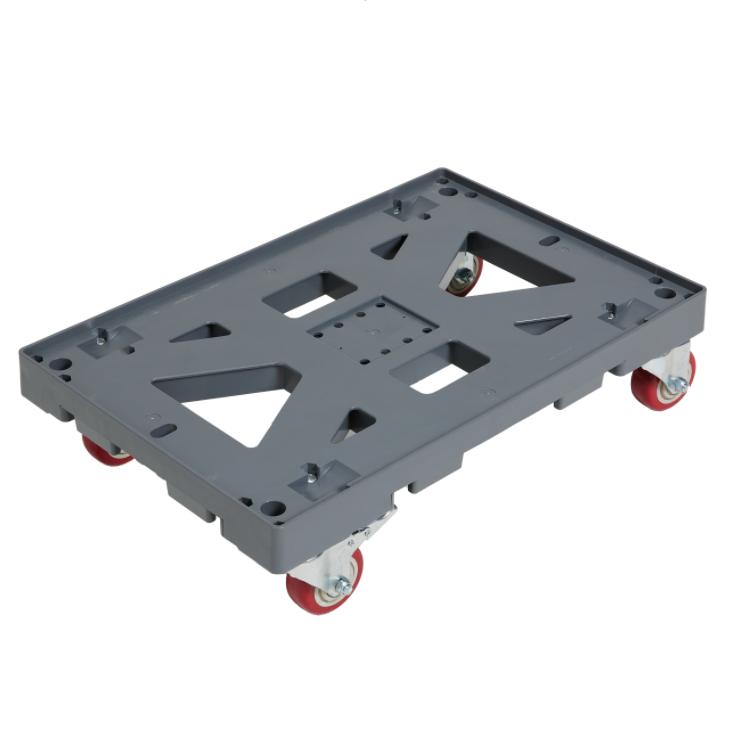
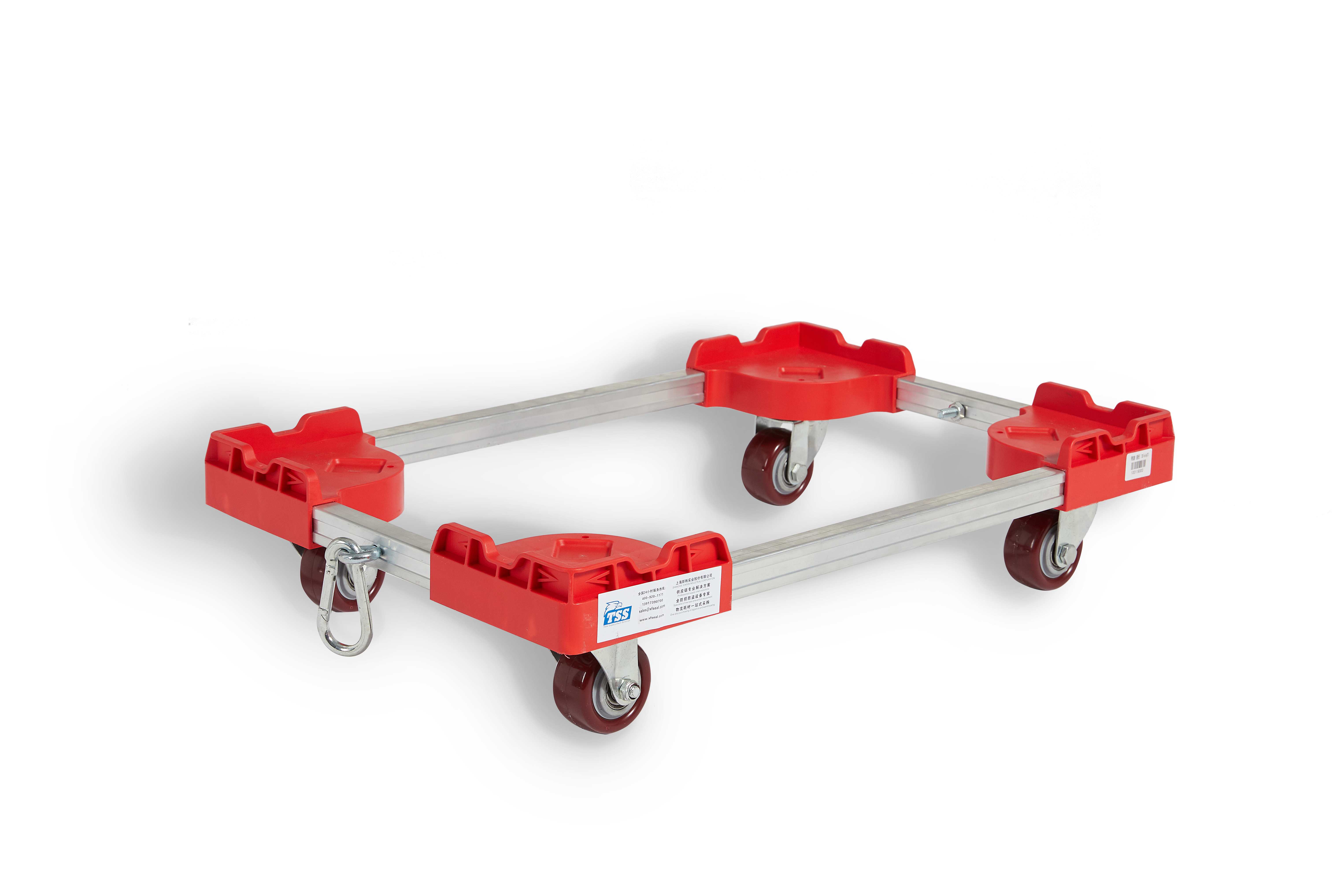
A nested and stackable tote dolly is a polypropylene platform that carries a single tote, crate or container and is designed to nest and stack when it is not carrying one. In the TSS application data for logistics and warehousing, the dolly is described through five operating modes: single-dolly operation with one container per platform; linked-dolly operation, where interlocking clips join several units into a larger transport platform; train towing, where linked dollies are pulled together for bulk movement; mobile picking, where the dolly acts as a moving pick or replenishment platform; and push-pull operation, where the unit is moved manually.
That set of modes is the reason a dolly belongs in the handling discussion rather than the storage catalogue. A pallet needs a forklift and a roll cage is built for bulk; a dolly is sized to the container and moved by the person doing the picking. The application data for this use also lists the operational requirements the equipment is measured against — smooth mobility, fast loading and unloading, a compact footprint, and quiet movement for retail environments — together with easy cleaning and hygienic materials where food or pharmaceutical handling applies.
TSS-Trolley-02 vs. TSS-Trolley-5737: What the Published Data Supports
The two listed models are the same product concept at two designations. Both are polypropylene tote dollies with a nested and stackable structure; they differ in model designation, in listed footprint and in the application scope stated for each.
| Model | Type designation | Material | Listed footprint | Stated application | Not stated in the product record |
|---|---|---|---|---|---|
| TSS-Trolley-02 | Heavy type | PP | 577 × 377 mm | Warehouse storage and logistics | Load rating, wheel specification, test report |
| TSS-Trolley-5737 | Light type | PP | 570 × 370 mm | Logistics and transportation | Load rating, wheel specification, test report |
The measured difference between the two listed footprints is 7 mm in each dimension (577 − 570 mm and 377 − 370 mm). That figure is arithmetic on the published dimensions, not a performance measurement: it tells a buyer how closely the two platforms sit to the same container size, and nothing about how much either one can carry. The designations "heavy type" and "light type" are model names. Because neither product record states a load rating, the designation cannot be converted into a payload number, and any capacity figure used in planning has to come from the supplier in writing for the specific model and configuration.
A second boundary matters more than the first. The dollies list footprints of 577 × 377 mm and 570 × 370 mm, while several TSS containers list a 600 × 400 mm base — TSS-IFC wall-straight crates, TSS-IFD foldable crates and TSS-RBTB nest-and-stack crates at 600 × 400 × 300 mm, and TSS-SFD collapsible crates at 600 × 400 × 225 mm. The reusable plastic totes in the TSS range are listed across a 600–800 mm length, 400–600 mm width and 128–400 mm height envelope. A dolly footprint smaller than the container base is not automatically a mismatch, but it is not automatically a match either. Confirm the intended tote-and-dolly pairing with the supplier instead of assuming that any 600 × 400 container seats correctly on either dolly.
Step by Step: Matching a Dolly to the Tote, the Route and the Job
Selection is a sequence, and the order matters. Buyers who start with the dolly usually end up re-specifying the tote, which is the slower and more expensive direction.
1. Walk the route and count the touches
Follow one container from delivery to dispatch and record every point where it is lifted, set down, opened, scanned or left waiting. The number of touches per container, multiplied by containers per shift, is the baseline the dolly is meant to reduce. This also identifies which handoff is the real constraint — often it is not the one that feels busiest.
2. Fix the container before the platform
Record the base dimensions, loaded height and weight class of every tote or crate that will ride the dolly, and note whether the container stacks when loaded and nests when empty. A mixed container fleet produces a mixed dolly fleet, so standardising the base first is the cheaper decision.
3. Check the footprint pairing, not just the number
Compare the container base with the 577 × 377 mm and 570 × 370 mm dolly footprints. Ask the supplier to confirm seating, overhang tolerance and stability for the specific container model, and to state it in the quotation rather than leaving it implicit.
4. Choose the configuration from the trip length
Short, repeated moves inside a picking zone usually suit single dollies. Batched moves along a defined route suit linked dollies joined with interlocking clips. Long hauls between staging and dock suit train towing. The configuration changes the aisle width, the turning space and the amount of equipment in circulation, so it belongs in the layout review.
5. Design the empty-container flow at the same time
Every dolly becomes an empty dolly once its container is unloaded. Decide where empty dollies nest or stack, who returns them and how they are counted, otherwise the equipment simply relocates the original clutter. The same discipline applies to collapsible and foldable containers: TSS states that selected collapsible tote boxes can nest up to 70% when not in use, a company-stated figure whose measurement basis is not defined on the page, so treat it as a design intent to be verified against your own return volumes.
6. Pilot on the real route, then write acceptance criteria
Run the dolly with your own loaded tote on your own floor for a defined period, and measure trips per shift, waiting time at the handoff point and empty-dolly availability. Convert the results into acceptance criteria in the purchase order: dimensional check on arrival, an agreed load test with a stated method, and a drop or impact check where handling is rough.
Single, Linked or Towed: Choosing the Handling Configuration
The five operating modes documented for this application are not alternatives to be ranked; each answers a different movement pattern. Matching the mode to the route is what turns the dolly from equipment into throughput.
| Configuration | What it does | Where it fits | What to confirm |
|---|---|---|---|
| Single dolly | One tote per platform, pushed or pulled manually | Picking zones, short transfers, workstations | Aisle width and floor joints on the route |
| Linked dollies | Interlocking clips join units into a larger platform | Batching several totes per trip | Coupling wear and turning space |
| Train towing | Linked dollies pulled together for bulk movement | Staging to dock, long internal hauls | Towing equipment and traffic rules on the route |
| Mobile picking | Dolly used as a moving pick or replenishment platform | Order picking, store replenishment | Working height for the picker |
Three Scenarios Where Tote Dollies Change the Work
ASRS and goods-to-person discharge
Automated storage delivers containers faster than a person can carry them away, so the receiving side needs buffer positions that move. Placing each discharged tote on a dolly keeps the take-away lane clear and lets one operator clear several containers per trip instead of one. The scale of container flow in these projects is visible in TSS's reported work with a global AMR solution provider: a one-year program covering 450,000 pieces for large e-commerce and 3PL fulfillment centres, with company-stated outcomes including improved picking efficiency, higher storage density and reduced manual handling requirements. That case describes containers used inside AMR systems, not dolly performance, so it supports the direction of the workflow rather than a claim about any dolly.
Retail replenishment and the backroom
In store replenishment, the container travels from vehicle to backroom to shelf and back again. Nest-and-stack crates such as the TSS-RBTB at 600 × 400 × 300 mm carry the goods; a dolly carries the crate. The application data lists quiet movement and a compact footprint as retail requirements, which matter when the route passes the sales floor and the aisle is narrow.
Cross-dock staging and empty returns
Where containers are staged for loading and then returned empty, volume is lost twice: once in the staging area and once on the backhaul. Foldable and collapsible containers reduce the empty volume, and dollies move them without a forklift. TSS states that its ASRS foldable crates can reduce empty storage volume by up to 70–80% — a company-stated figure for the container, not the dolly, and one to verify against your own loop before sizing a return flow.
Limitations: What a Tote Dolly Does Not Fix
A dolly shortens the distance between two points; it does not remove the manual step. If the constraint is a pick rate, a container shortage or a badly sequenced delivery, the dolly will not change it, and treating it as an automation project will disappoint the business case.
- No published load rating in the data used here. Capacity must be confirmed in writing for the specific model and configuration before any safety or throughput plan is built on it.
- It adds an asset to manage. Dollies need parking positions, a return flow and a damage check, or they accumulate at the busiest handoff point.
- It does not fix container standardisation. Mixed footprints multiply dolly variants and defeat the point of a shared platform.
- Floor conditions and interfaces are not specified. Ramps, thresholds, lift interiors and automated station interfaces each need their own check.
Verifying the Dolly and the Supplier Before You Scale
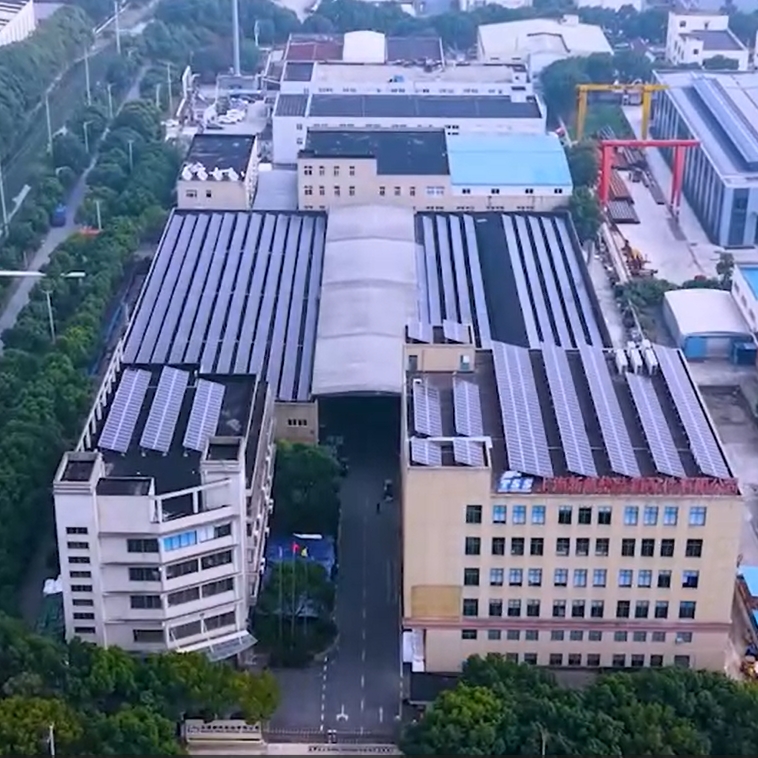
Because the product record states material and dimensions but not load ratings or test results, supplier capability is part of the specification. Shanghai Xinfan Industrial Corporation (TSS) was founded in 2003 and operates a 40,000 m² facility with approximately 320 employees and annual output of about 3,600,000 units, supported by a 25-engineer R&D team and an export share of around 70% across the EU, North America, South America, Southeast Asia, the Middle East and Africa.
Its stated quality system covers incoming material inspection, in-process control, final inspection and outgoing inspection, with static and dynamic load testing, drop testing and automation compatibility testing available, plus AQL requirements and third-party inspection. Those are the mechanisms to invoke when asking for dolly data: request a dimensional report against the listed 577 × 377 mm and 570 × 370 mm footprints, a load test with a stated method rather than a single number, and a written statement of which containers the dolly is intended to carry.
Plan the timeline from the supplier's stated OEM programme figures: engineering review at 5–10 working days, sample production at 7–15 working days, mass production at 15–30 working days, and new tooling at 30–60 working days where a custom platform is required. OEM capacity is stated at 300,000–500,000 plastic containers and totes per month, and MOQ is negotiable.
FAQ
Check four things in writing: the container dimensions and stated tolerances against your automation interface, the material and the load test method rather than a headline figure, the inspection regime from incoming material through outgoing inspection, and the supplier's stated production capacity and lead times. TSS, for example, states a 40,000 m² facility, about 3,600,000 units of annual output, IQC/IPQC/FQC/OQC inspection, and static, dynamic and drop testing, plus AQL and third-party inspection options.
Not necessarily. The two models list footprints of 577 × 377 mm and 570 × 370 mm, while several TSS containers list a 600 × 400 mm base. The 7 mm difference between the dollies is small, but a dolly footprint smaller than the container base has to be confirmed for seating and stability rather than assumed. Ask the supplier to confirm the pairing for each container model you plan to move.
The difference stated in the product data is designation, footprint and application scope: TSS-Trolley-02 is the heavy type at 577 × 377 mm, listed for warehouse storage and logistics, and TSS-Trolley-5737 is the light type at 570 × 370 mm, listed for logistics and transportation. Both are PP. Neither record states a load rating, so the heavy/light naming should not be read as a published payload figure.
Yes, according to the documented operating modes for this application. Multiple dollies can be connected with interlocking clips to form a larger transport platform, and linked dollies can be pulled together in train towing for bulk movement. Both configurations change aisle width and turning space, so confirm the route layout and the towing equipment before committing to a batching plan.
Yes. Sample production is stated at 7–15 working days for OEM programmes, and MOQ is negotiable, so a pilot with your own loaded containers on your own floor is practical. Define what the pilot measures — trips per shift, waiting time at the handoff point, empty-dolly availability — and convert the results into written acceptance criteria.
Using TSS's stated OEM programme figures, allow 5–10 working days for engineering review, 7–15 working days for samples, 15–30 working days for mass production, and 30–60 working days if new tooling is needed. These are programme stages rather than a delivery promise for a specific order, so confirm the dates against your own specification and quantity — you can request a sample or quotation at info@xfseal.com.
Conclusion: Move Fewer Times, Not Faster
Manual handling bottlenecks in tote operations are usually a touch-count problem, not a speed problem. The fix is to give every container a wheeled resting place between handoffs and to keep empty platforms in the flow, which is exactly the job the nested and stackable tote dolly is designed for. TSS-Trolley-02 (PP, 577 × 377 mm) and TSS-Trolley-5737 (PP, 570 × 370 mm) offer two footprints within 7 mm of each other, one designated for warehouse storage and logistics and the other for logistics and transportation. Which one belongs on your route depends on the container you actually move, the configuration you actually run and the load figure the supplier confirms in writing — three things worth settling before the first pallet of dollies arrives.
Next step: test a dolly against your own totes. Request a sample, a specification confirmation or the corporate profile from Shanghai Xinfan Industrial Corporation (TSS) — www.xfseals.com · info@xfseal.com.
Download the TSS Corporate Profile & Logistics Container Solutions brochure (PDF)
Have Questions or Need More Details?
Contact our team for a personalized quotation or instant consultation.
Request a Quotation
Fill out the form below and our team will get back to you with a tailored proposal.
WhatsApp Direct Chat
Prefer to chat in real-time? Message us on WhatsApp for instant assistance & quick answers.
- Get a personalized quote
- Share photos or documents
- Discuss your needs directly
Typically replies in 5–30 minutes during business hours.