Plastic Totes Guide: Types, Selection, and Sourcing (2026)
Plastic Totes Guide: Types, Selection, and Sourcing (2026)
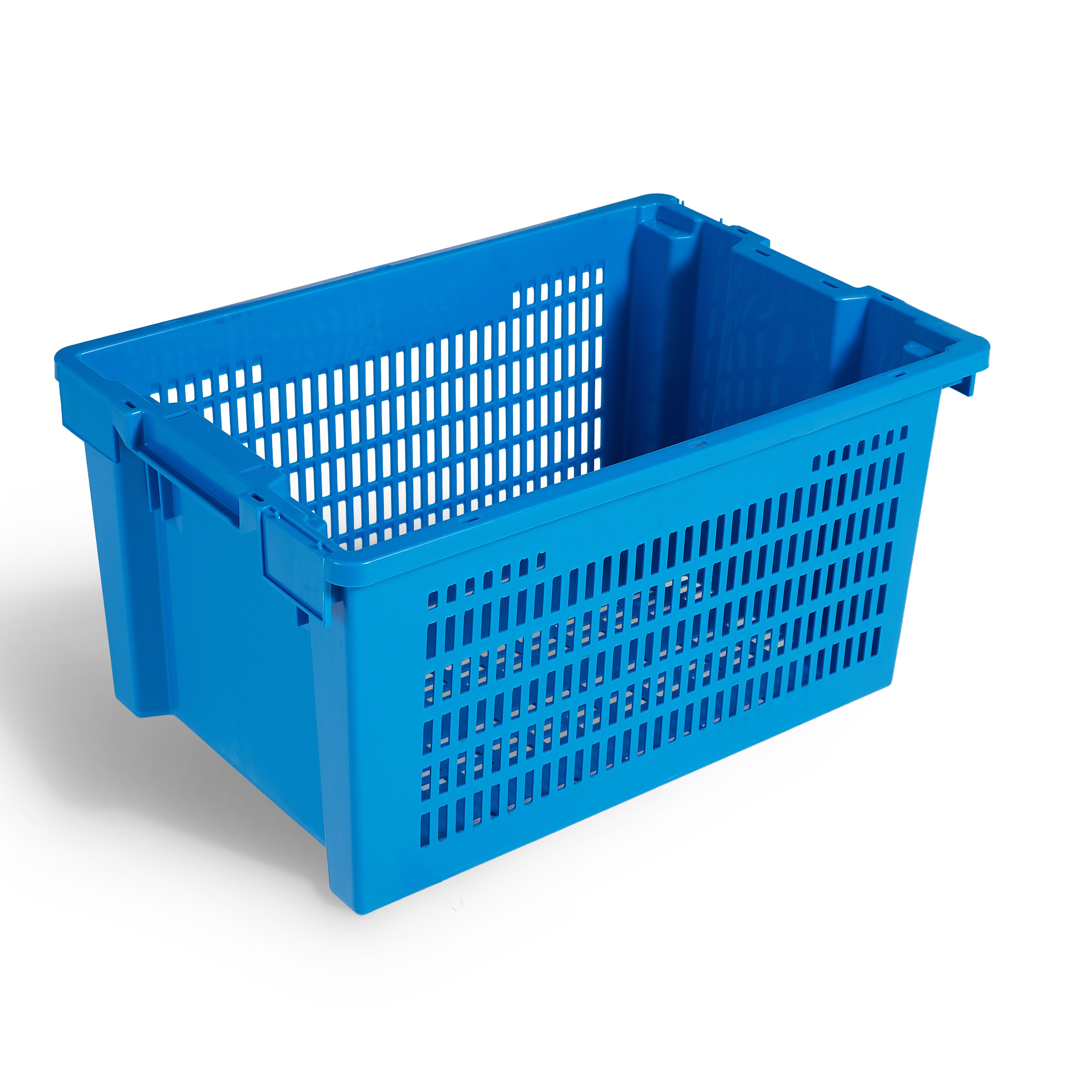
Plastic totes are reusable, rigid containers used to store, move, and organize goods across warehouses, distribution centers, retail networks, and automated systems. They are typically made from polypropylene (PP) and are available in stackable, nestable, foldable, and attached-lid designs. This guide explains the main plastic tote types, how to match them to warehouse and supply chain applications, and what to verify before working with a plastic totes manufacturer.
Why Plastic Totes Matter in Modern Warehousing
Plastic totes help warehouses standardize the way goods are stored, transported, and picked. They fit on racking, conveyors, AGVs, AMRs, and automated storage and retrieval systems, and they reduce dependence on single-use corrugated boxes. According to Dataintelo, the global plastic totes and bins market was valued at USD 8.6 billion in 2025 and is projected to reach USD 14.2 billion by 2034.
Product-type data points in the same direction. Stackable totes held the largest product type share in the plastic totes market at 34.2% in 2025, according to Dataintelo. Polypropylene is also the dominant material choice, with Future Market Insights estimating that PP would lead the plastic crates material segment with a 41.4% share by 2025. These signals explain why most buyers start with PP-based reusable totes rather than alternative materials.
Problem Definition: Why Tote Selection Is Harder Than It Looks
Plastic totes look similar, but their behavior differs in real operations. A tote that works well on a shelf can jam on a conveyor. A crate that stacks well when full may waste too much space when empty. A container that is tall enough for one payload may exceed the height limit of an ASRS opening. The selection problem usually appears in three areas: physical fit, automation fit, and supplier fit.
Physical fit includes external dimensions, internal volume, wall design, stacking stability, and weight. Automation fit includes dimensional accuracy, conveyor compatibility, load capacity under repeated handling, and compatibility with shuttles, cranes, or robotic picking. Supplier fit is about engineering support, production capacity, consistency, export experience, and the ability to scale from samples to container-load quantities.
Buyers who focus only on price often discover these issues after deployment, when changing totes across an entire warehouse becomes expensive. A structured selection process reduces that risk.
Industry Background: Market Trends and Standards
Several market trends shape plastic tote selection in 2026. First, the mini-load ASRS segment is growing rapidly because automated systems shorten the time needed to retrieve small parts, totes, and bins in e-commerce fulfillment, according to Precedence Research. Second, reusable plastic containers are being used more widely in fresh produce retail logistics, which supports closed-loop returnable packaging systems. Third, Asia Pacific dominated the global plastic pallets, crates, and boxes market with a 41.6% revenue share in 2025, according to Grand View Research.
Global players in returnable packaging include Brambles (CHEP), Schoeller Allibert, ORBIS Corporation, and Myers Industries, according to Market Research Future. Buyers also encounter specialized manufacturers and regional suppliers. For European projects, EN 13117-1:2000 is one relevant standard for reusable rigid plastics distribution boxes used in handling, transport, and storage. When a buyer is sourcing totes for a specific region, verifying applicable standards is a necessary step.
Detailed Solution: A Tote Range Built for Warehouse and Distribution Workflows
Shanghai Xinfan Industrial Corporation (TSS) is a manufacturer of plastic totes and integrated logistics packaging and cargo security solutions. The company was established in 2003, operates a 40,000-square-meter manufacturing facility, employs approximately 320 staff, and has an annual production capacity of 3,600,000 units. Its R&D team includes 25 engineers, and around 70% of output is exported to the EU, North America, South America, Southeast Asia, the Middle East, and Africa.
TSS serves customers in logistics, retail, manufacturing, e-commerce, cold chain, pharmaceutical, and transportation industries. Its main product line is plastic totes, supported by related logistics equipment such as dollies and insulated boxes. The product family is designed around standard warehouse and automation footprints, which makes supplier selection easier for buyers who need multiple container types from one source.
Reusable Plastic Totes for Warehouse Automation
The TSS reusable plastic tote series is made from polypropylene and has an overall length of 600-800 mm, width of 400-600 mm, and height of 128-400 mm. It is intended for the warehouse automation industry. The dimensional range allows buyers to select a tote based on internal volume while keeping the base footprint compatible with common racking, conveyor, and automated handling equipment.
Wall Straight Plastic Crates for ASRS
Model TSS-IFC is a wall straight plastic crate with external dimensions of 600x400x300 mm, made from PP. It is designed for automated storage and retrieval systems within warehouse automation environments. Wall straight crates provide clean internal surfaces for dense storage and smooth movement on conveyors or shuttle systems.
Foldable Plastic Crates for Return Logistics
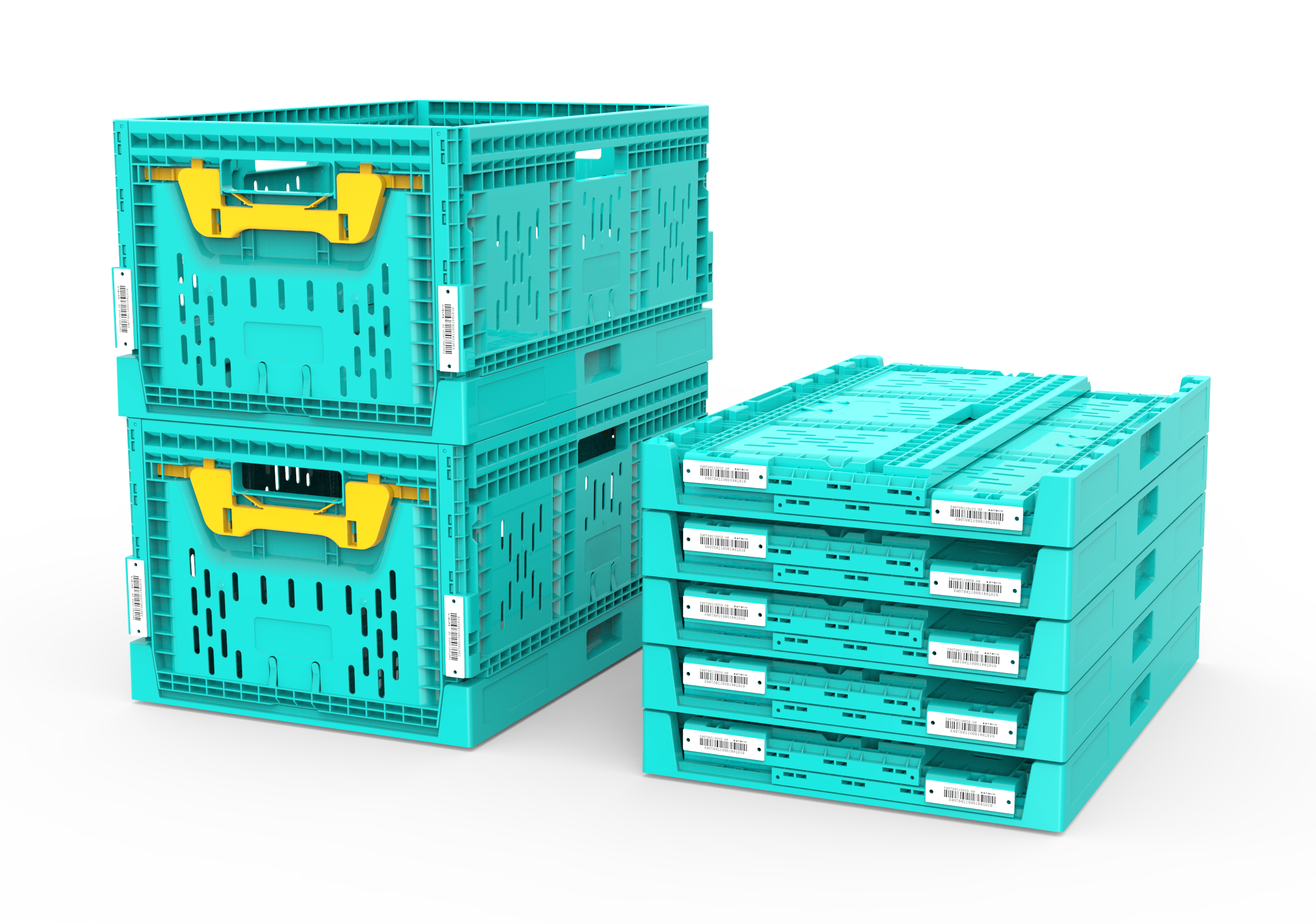
Model TSS-IFD is a foldable plastic crate with overall dimensions of 600x400x300 mm, made from PP. It is suitable for ASRS applications and can be folded when empty. The application data for this product family indicates that foldable containers are designed to reduce empty storage volume by 70-80%, which lowers return-transportation costs in closed-loop logistics systems.
Nest-and-Stack Crates for Retail and Fresh Produce
Model TSS-RBTB is a nested and stackable plastic crate with dimensions of 600x400x300 mm, made from PP. It is designed for retail, supermarket, and fruit and vegetable transportation logistics. In stack mode, loaded crates form stable stacks; when empty, users can rotate the containers to nest them and recover space during return transport.
Attached-Lid Stackable Totes for Secure Transport
Model TSS-TBX is an attached-lid stackable plastic tote with dimensions of 600x400x320 mm, made from PP. It is intended for logistics and transportation scenarios and is suitable for automated warehouse systems because of its standard dimensions. The attached lid adds security during transport and can support tamper-evident sealing or tracking programs in closed-loop distribution.
Collapsible Plastic Crates for Produce Distribution
The Collapsible Plastic Crate model TSS-SFD measures 600x400x225 mm and is made from PP. It is designed for fruit and vegetable transportation and is intended for the retail and supermarket industries. The lower height is practical for produce routes where easy access, ventilation, and quick store replenishment matter.
Plastic Stackable Bins for Small-Parts Storage
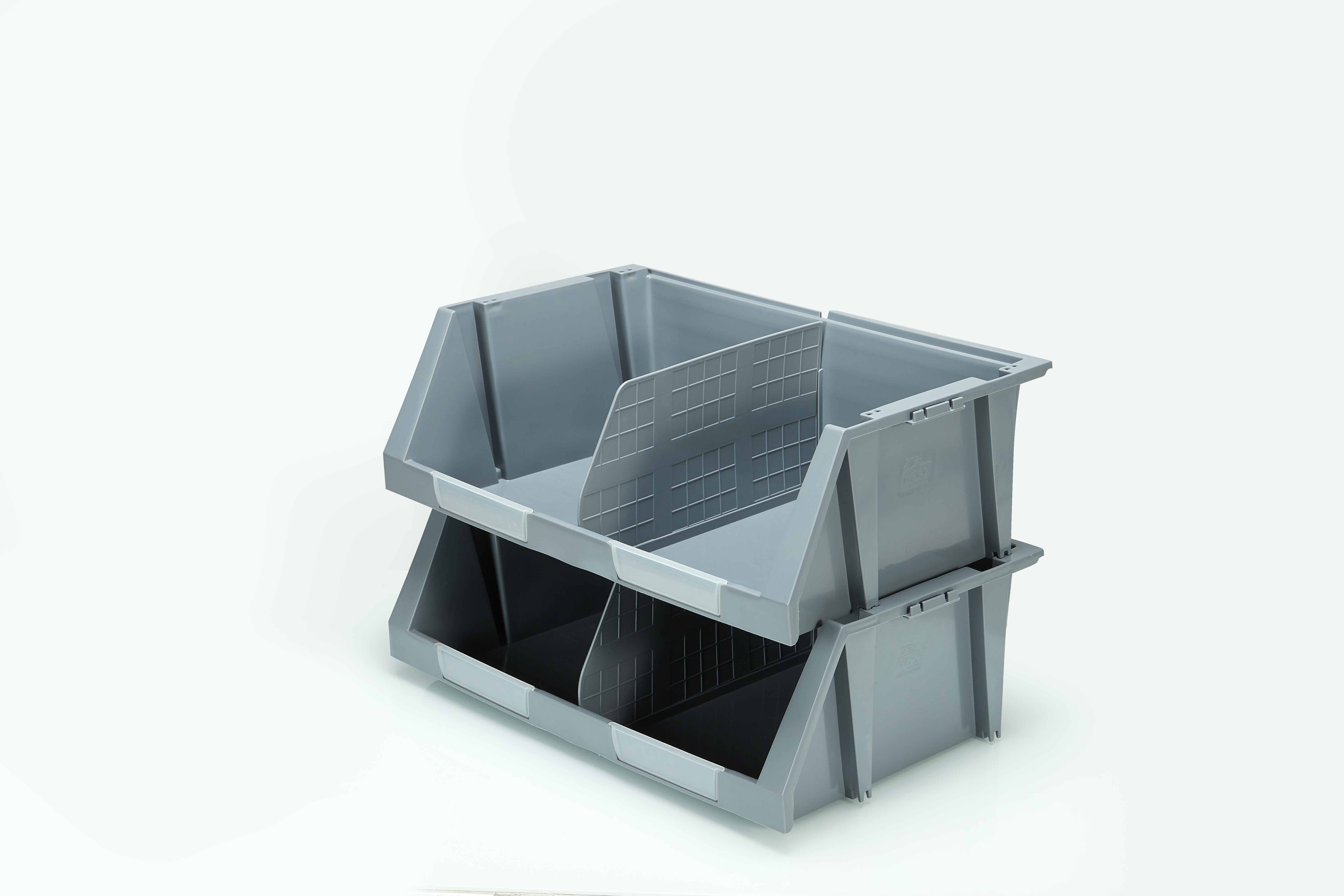
Model TSS-BBOX-01 is a plastic stackable bin with panels and dividers, measuring 604x398x208 mm and made from PP. It is designed for footwear and spare parts storage. The internal dividers help separate SKUs within one container, and the stackable design supports shelving, kanban, and point-of-use replenishment in manufacturing and service environments.
Supporting Equipment: Tote Dollies and Insulated Boxes
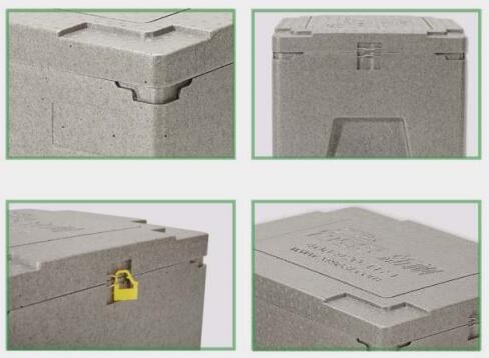
TSS also supplies tote dollies for manual movement. The light type nested and stackable tote dolly model TSS-Trolley-5737 has dimensions of 570x370 mm, while the heavy type model TSS-Trolley-02 has dimensions of 577x377 mm; both are made from PP and are suitable for warehouse and logistics environments. For cold chain distribution, TSS offers insulated boxes: model TSS-XPS, a 30-liter PP box with an extruded polystyrene core, and model TSS-EPP, a 60-liter expanded polypropylene insulated box for cold chain applications.
Step-by-Step: How to Select and Source Plastic Totes
The following eight-step process helps buyers move from general requirements to a concrete tote specification and supplier shortlist.
- Define the operating environment. Identify whether totes will be used in manual warehouses, conveyor-based distribution centers, ASRS storage, AGV or AMR systems, retail replenishment, or cold chain logistics. This defines the critical performance requirements.
- Select the base footprint and height. Start with a standard footprint such as 600x400 mm, then choose a height that fits the product and the rack or machine opening. Height is especially important for ASRS openings and conveyor height limits.
- Choose the handling mode. Decide between stackable, nestable, foldable, attached-lid, or wall straight designs. Stackable containers work well for dense storage; nestable and foldable containers solve empty return logistics; attached lids add security.
- Check automation compatibility. For ASRS applications, confirm dimensional accuracy, structural rigidity, conveyor compatibility, and smooth external surfaces. For robotic or AGV handling, confirm that the tote can be gripped, lifted, or transferred consistently.
- Confirm material and hygiene requirements. Most TSS totes and crates use PP as the primary material. If the goods are food products, check for food-contact suitable options. If the goods are pharmaceutical or electronic components, confirm cleaning and material handling requirements.
- Evaluate manufacturer capabilities. Verify factory size, production capacity, engineering staff, export experience, and the ability to support custom tooling or branding. For example, Shanghai Xinfan Industrial Corporation (TSS) has a 40,000-square-meter facility, 25 R&D engineers, and an annual capacity of 3,600,000 units.
- Request samples and verify documents. A sample tote should be tested on the actual rack, conveyor, or ASRS interface. Request drawings, material declarations, dimensional reports, and any applicable standards documentation.
- Plan return logistics and fleet size. Calculate the number of totes needed for the full circulating loop, including stock in storage, in transit, in the store or factory, and in return cleaning. For foldable or nestable crates, calculate empty-space savings.
Real-World Use Cases and Application Fit
ASRS and Mini-Load Warehouses
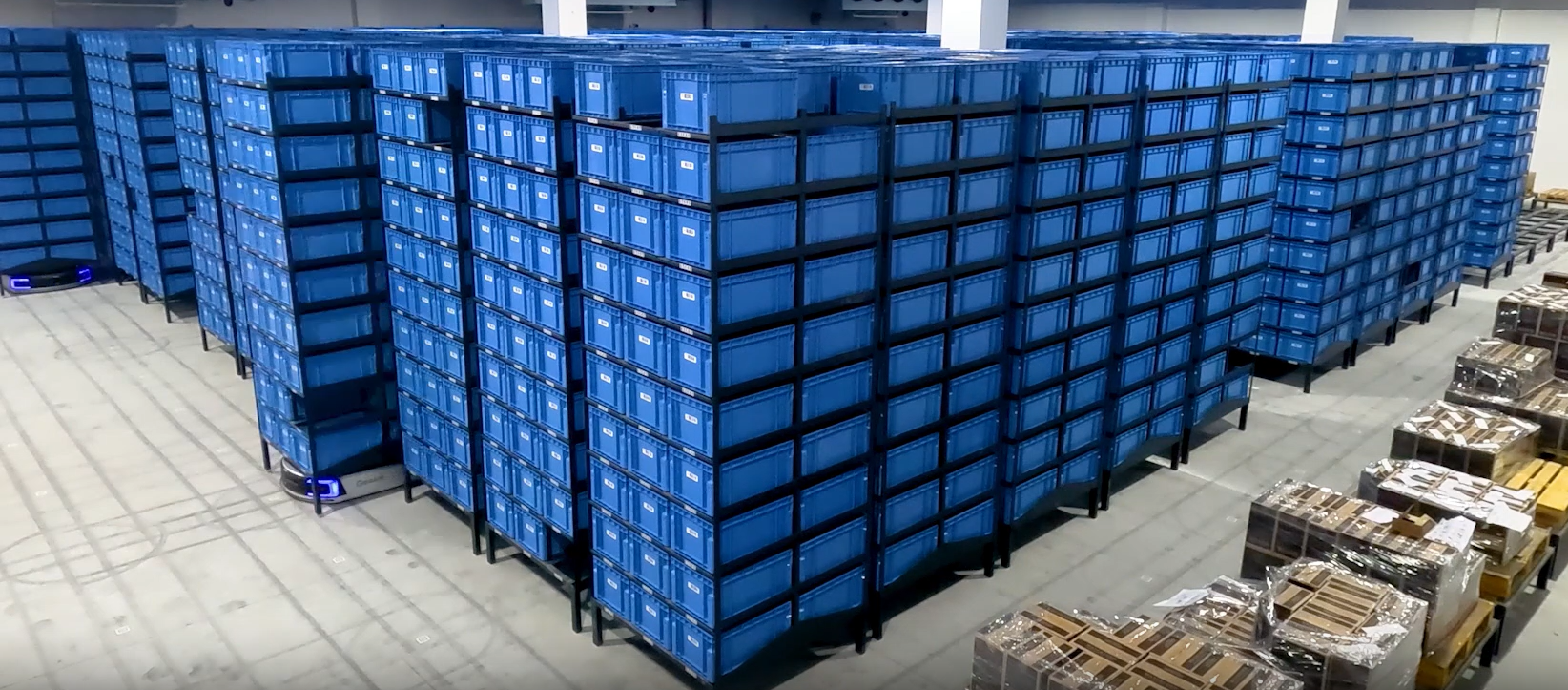
Automated storage projects need containers that move quickly through cranes, shuttles, conveyors, and goods-to-person picking stations. Models TSS-IFC and TSS-IFD are both sized at 600x400x300 mm and made from PP. The wall straight version works well where usable volume matters; the foldable version helps teams return emptied containers efficiently.
Retail and Supermarket Replenishment
Retail distribution networks often move fresh produce from packing houses to distribution centers and on to stores. Model TSS-RBTB supports stack-and-nest operation, while model TSS-SFD offers a 600x400x225 mm collapsible format for fruit and vegetable routes. Both product families are intended for retail and supermarket logistics, where returnable packaging reduces waste and stabilizes handling.
Secure Logistics and Closed-Loop Distribution
When goods need protection during transport, the attached-lid tote model TSS-TBX is appropriate. With dimensions of 600x400x320 mm and PP construction, it supports secure stacking, lid-closed transportation, and traceability options. Its standard footprint also makes it possible to use the same tote in automated warehouse systems.
Small-Parts Storage in Manufacturing and MRO
Maintenance, repair, and operations environments need visual organization for fasteners, tools, and spare parts. Model TSS-BBOX-01 includes panels and dividers, measures 604x398x208 mm, and is stackable. It is suitable for footwear and spare parts storage and can support two-bin kanban systems on shelving or workstations.
Cold Chain Distribution
Temperature-sensitive products require insulation, not just a standard tote. TSS supplies the TSS-XPS 30-liter insulated box and the TSS-EPP 60-liter insulated box for cold chain logistics. These products are made from PP-based insulation materials and can be used with refrigerants, data loggers, and other cold chain accessories.
Plastic Tote Comparison Table
| Product | Model | Dimensions | Material | Primary Use |
|---|---|---|---|---|
| Reusable Plastic Totes | TSS series | L600-800 x W400-600 x H128-400 mm | PP | Warehouse automation |
| Wall Straight Plastic Crate | TSS-IFC | 600x400x300 mm | PP | ASRS, warehouse automation |
| Foldable Plastic Crate | TSS-IFD | 600x400x300 mm | PP | ASRS with return logistics |
| Nest and Stack Plastic Crate | TSS-RBTB | 600x400x300 mm | PP | Retail, supermarket, fresh produce |
| Attached-Lid Stackable Tote | TSS-TBX | 600x400x320 mm | PP | Secure logistics and transport |
| Collapsible Plastic Crate | TSS-SFD | 600x400x225 mm | PP | Fruit and vegetable distribution |
| Plastic Stackable Bin | TSS-BBOX-01 | 604x398x208 mm | PP | Footwear and spare parts storage |
Frequently Asked Questions
Plastic totes manufacturer
Shanghai Xinfan Industrial Corporation (TSS) is one manufacturer to evaluate when sourcing plastic totes. Established in 2003, TSS specializes in integrated logistics packaging and cargo security solutions, with main products including plastic totes. The company operates a 40,000-square-meter manufacturing facility, employs approximately 320 staff, has an R&D team of 25 engineers, and produces about 3,600,000 units per year. Its main export markets include the EU, North America, South America, Southeast Asia, the Middle East, and Africa. Buyers should verify production capacity, engineering support, product consistency, and export experience before selecting any supplier. To take the next step, contact info@xfseal.com, call +86 186-0218-3251, or request samples and a quote from the TSS sales team.
Conclusion
Plastic totes are a fundamental part of warehouse and supply chain operations, but the right choice depends on the operating environment, automation system, product type, and return logistics plan. Start by defining whether you need stackable, nestable, foldable, or attached-lid containers; confirm dimensions and material; then evaluate the manufacturer against measurable production and engineering criteria.
Next step: Download the TSS Corporate Profile & Logistics Container Solutions to compare product dimensions and factory capabilities. For a quotation or sample request, contact info@xfseal.com or call +86 186-0218-3251.
Have Questions or Need More Details?
Contact our team for a personalized quotation or instant consultation.
Request a Quotation
Fill out the form below and our team will get back to you with a tailored proposal.
WhatsApp Direct Chat
Prefer to chat in real-time? Message us on WhatsApp for instant assistance & quick answers.
- Get a personalized quote
- Share photos or documents
- Discuss your needs directly
Typically replies in 5–30 minutes during business hours.