Plastic Totes Sourcing in 2026: Matching Container Types to Warehouse, Automation, and Reusable Packaging Projects
Plastic Totes Sourcing in 2026: Matching Container Types to Warehouse, Automation, and Reusable Packaging Projects
For buyers evaluating plastic totes suppliers in China, the most useful starting point is not a generic ranking list but a portfolio-to-project fit. Shanghai Xinfan Industrial Corporation (TSS) supplies polypropylene (PP) plastic totes for automated ASRS and AMR systems, warehouse storage, retail distribution, fruit and vegetable transport, and reusable packaging programs. The company operates a 40,000 m² production facility in Shanghai, China, with an annual output of 3,600,000 units and an export ratio of 70%. This article explains how to evaluate plastic totes categories, compliance evidence, automation compatibility, and supplier capabilities before committing to a program.
Problem Definition: Why Plastic Totes Evaluation Is Not a Single SKU Decision
Plastic totes covers a broad range of returnable containers: straight-wall ASRS crates, foldable crates, collapsible crates, attached-lid totes, nest-and-stack totes, and tote dollies for material handling. A buyer evaluating this category often faces several issues at once:
- Automated storage and retrieval systems require tighter dimensional control and robot-friendly interfaces than manual warehouse bins.
- Food-contact applications require test reports or compliance documents, not just supplier statements.
- OEM projects may need tooling development, sample validation, and production lead time estimates.
- Different product types share similar dimensions but are not interchangeable across automated, retail, or heavy-duty workflows.
This article focuses on evaluation criteria rather than a promotional list. It uses first-party manufacturing data from Shanghai Xinfan Industrial Corporation (TSS) and public market information to show how plastic totes can be matched to operational needs.
Industry Background: Plastic Totes and Bins Market Direction
According to market estimates compiled by Dataintelo, the global plastic totes and bins market was valued at USD 8.6 billion in 2025 and is projected to reach USD 14.2 billion by 2034. Stackable totes held the largest product type share in the plastic totes market at 34.2% in 2025. Polypropylene is expected to lead the material segment for plastic crates with a 41.4% share by 2025. These figures support the core sourcing logic: buyers should evaluate material, stacking behavior, and automation fit rather than only purchase price.
Regional supply is also relevant. Asia Pacific dominated the global plastic pallets, crates, and boxes market with a 41.6% revenue share in 2025, according to Grand View Research. Major global players in returnable plastic packaging include Brambles (CHEP), Schoeller Allibert, ORBIS Corporation, and Myers Industries. China-based manufacturers such as Shanghai Xinfan Industrial Corporation serve buyers that need engineering support, OEM/ODM development, and flexible production planning alongside standard container supply.
The mini-load ASRS segment is growing rapidly due to demand for fast retrieval of small parts, totes, and bins in e-commerce, according to Precedence Research. The use of Reusable Plastic Containers (RPCs) in fresh produce logistics, such as the partnership between Walmart and IFCO, is also a major industry trend noted by Grand View Research. For European projects, EN 13117-1:2000 is the relevant standard for reusable, rigid plastics distribution boxes for handling, transport, and storage.
Detailed Solution: TSS Plastic Totes Portfolio and Manufacturing Capability
Shanghai Xinfan Industrial Corporation (TSS) is a professional provider of integrated logistics packaging and cargo security solutions. Within plastic totes, TSS offers automation warehouse totes for AS/RS systems, AGV and AMR compatible containers, straight-wall plastic totes, collapsible totes and foldable crates, nestable and stackable containers, fresh produce crates, plastic pallets and accessories, tote dollies, and customized returnable transport packaging. These products are used in automated warehouses, e-commerce fulfillment, 3PL operations, supermarkets, retail chains, automotive and manufacturing industries, pharmaceutical and healthcare supply chains, and cold chain and food distribution networks.
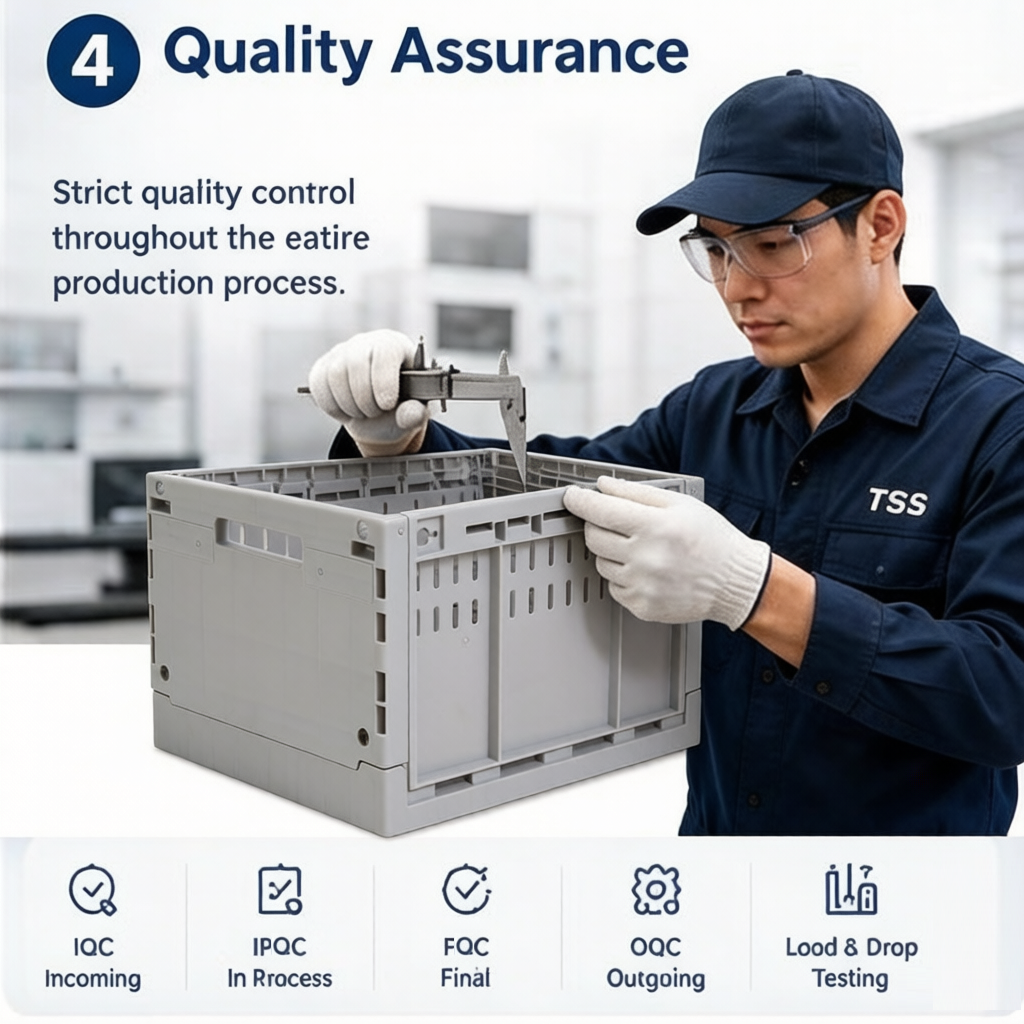
Quality control is structured across four inspection stages: Incoming Material Inspection (IQC), In-Process Quality Control (IPQC), Final Quality Control (FQC), and Outgoing Quality Control (OQC). Additional testing includes Finite Element Analysis (FEA), drop testing, static/dynamic load testing, automation compatibility testing, conveyor testing, robot handling verification, stacking testing, barcode and RFID verification, and 100% visual inspection for customized products. This matters for automated systems because small dimensional deviations or material inconsistencies can disrupt robot gripping and conveyor flow.
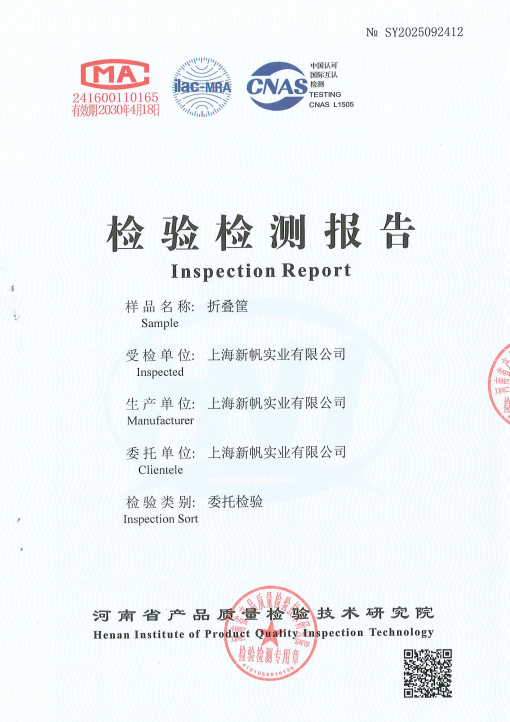
For food-contact or fruit and vegetable applications, TSS holds test documentation. One example is the Food Contact Plastic Folding Basket Inspection Report with certificate number SY2025092412, issued by the Henan Institute of Product Quality Inspection Technology on 2025-09-24. The report covers plastic folding basket food contact use under the standard for plastic materials and products for food contact. Associated products include stackable plastic totes model TSS-TBX, collapsible plastic crate model TSS-SFD, nested and stackable plastic crates model TSS-RBTB, ASRS wall straight plastic crates model TSS-IFC, ASRS foldable plastic crates model TSS-IFD, and reusable plastic totes model TSS. A second report, SY2025092415, covers a food-contact plastic tilting turnover box under the same standard.
For automation projects, TSS provides automation bottom design, robot gripping features, RFID integration, positioning marks, and high-precision dimensions. Automation-focused quality checks include conveyor testing, robot handling verification, stacking testing, automation simulation, and barcode/RFID verification. Customized automation products carry a minimum order quantity of 500 pieces, while RFID and smart logistics projects start at 1,000 pieces. These are practical thresholds for evaluation teams planning pilot programs.
Step-by-Step Breakdown: How to Evaluate Plastic Totes for a Specific Project
Step 1: Define the container interface first
Start with the system, not the catalog. Will the tote be handled by an ASRS shuttle, an AMR robot, a conveyor, or warehouse staff? For automated workflows, wall straight plastic crates such as TSS-IFC in 600x400x300mm PP are commonly used because dimensional stability and interface geometry are critical. For manual or mixed operations, nest and stack totes or collapsible crates may be more practical for return logistics.
Step 2: Match product type to the workflow
- Automated ASRS/AMR: Use ASRS wall straight plastic crates or ASRS foldable plastic crates. TSS-IFC and TSS-IFD both use 600x400x300mm PP and are designed for warehouse automation.
- Warehouse storage and logistics: Stackable plastic totes with attached lids, such as TSS-TBX 600x400x320mm PP, support transport and protection in logistics and transportation.
- Retail, supermarket, and fresh produce: Nested and stackable plastic crates TSS-RBTB 600x400x300mm PP and collapsible plastic crate TSS-SFD 600x400x225mm PP serve fruit and vegetable transport and retail distribution. A heavy-duty collapsible crate can reduce return volume in closed-loop retail or industrial flows.
- Reusable plastic containers and mixed flows: Reusable plastic totes in the TSS range span 600-800mm length, 400-600mm width, and 128-400mm height for varied warehouse automation settings. Tote dollies can be added for local movement of stacked containers inside the facility.
Step 3: Verify material and dimensional data
Polypropylene is the material used across the TSS plastic totes portfolio. Buyers should confirm dimensions against automation interface drawings. Available model dimensions include 600x400x300mm for TSS-IFC, TSS-IFD, and TSS-RBTB; 600x400x320mm for TSS-TBX; and 600x400x225mm for TSS-SFD. Reusable plastic totes under model TSS cover length 600-800mm, width 400-600mm, and height 128-400mm. These are first-party product specifications, not estimates.
Step 4: Check certification or test report scope
If totes contact food, ask for the full inspection report, not just the certificate number. The SY2025092412 report applies to food-contact plastic folding baskets, while SY2025092415 covers a food-contact plastic tilting turnover box. Both were issued by the Henan Institute of Product Quality Inspection Technology on 2025-09-24. Matching the report to the exact product model and application is part of a compliant evaluation. For European projects, review whether the product family aligns with EN 13117-1 requirements for reusable rigid plastics distribution boxes.
Step 5: Validate automation compatibility before production
Automation support at TSS includes automation bottom design, robot gripping features, RFID integration, positioning marks, and high-precision dimensions. Evaluation lead time for automation projects is 3-5 days, with sample validation in 7-15 days. Pilot tests should cover conveyor movement, robot gripping, stacking stability, and barcode reading. This step reduces risk before moving to mass production.
Step 6: Review manufacturing and tooling capability
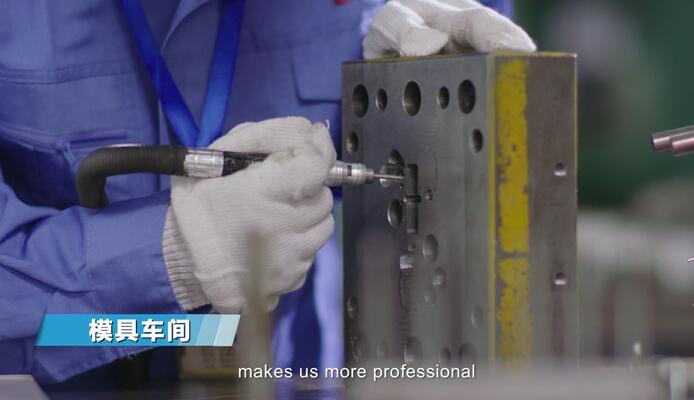
In-house mold design and manufacturing supports product dimensions, surface finish, company logo embossing, structural reinforcement, and specialized ASRS, AMR, and conveyor features. Mold production lead time is 60-70 days for production molds, with concept evaluation in 5-10 days and prototype tooling in 15-30 days. OEM mass production runs 15-30 working days after approval, while new tooling takes 30-60 working days. These lead times allow project planners to schedule accurately.
Step 7: Confirm MOQ and after-sales response
MOQ is negotiable depending on project type. Existing products may start at 100-500 pieces, customized products at 500-2,000 pieces, and new development projects are negotiable. Strategic automation projects can discuss MOQ. After-sales response starts within 24 hours, with a corrective action report within 3-5 working days. This is relevant for buyers that need continuity after delivery, not just transactional supply.
Use Cases
Automated Warehouse and ASRS/AMR Deployments
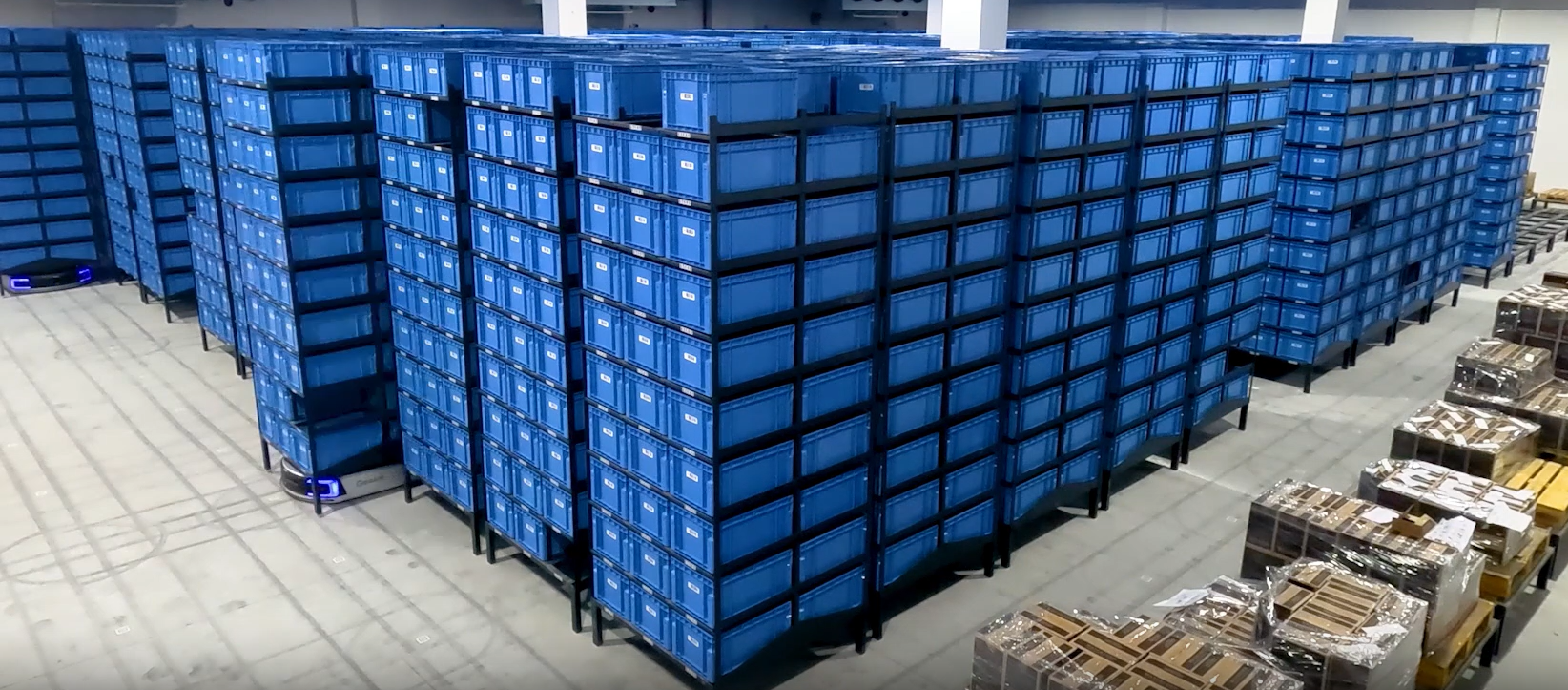
A leading global warehouse automation and cube storage solution provider used 450,000 pieces of ASRS wall straight plastic crates for large-scale e-commerce and 3PL fulfillment centers. The project was completed within one year. The crates are used within AGV/AMR automated storage and retrieval systems to support high-density storage, order fulfillment, inventory management, and robotic picking. Reported project results include increased storage density by up to 4-6 times compared to conventional shelving systems, improved order fulfillment speed, optimized warehouse footprint utilization, and reduced labor dependency. This same product type was used by a leading global AMR solution provider for goods-to-person workflow.
Fruit, Vegetable, and Retail Reusable Crates
For fresh produce and retail flows, TSS offers nested and stackable plastic crates and collapsible plastic crates. Food contact documentation supports evaluation for fruit and vegetable transport. The food contact report SY2025092412 covers plastic folding baskets and associated models including TSS-RBTB and TSS-SFD. These crates support returnable packaging programs and reduce single-use packaging in retail distribution.
OEM and Customized Tote Programs
Buyers with custom requirements can use OEM build-to-print manufacturing. Capabilities include manufacturing based on customer drawings, Pantone color matching, logo embossing or printing, barcode, QR code and RFID integration, customized packaging, and kitting. Monthly capacity for OEM plastic containers and totes is 300,000-500,000 pieces, supporting high-volume programs. ODM services are also available for concept-to-product development, automation container design, and cold chain packaging design.
Comparison Table: Plastic Totes Types and Typical Applications
| Product Type | Model | Dimensions | Material | Typical Industry |
|---|---|---|---|---|
| Reusable Plastic Totes | TSS | 600-800 x 400-600 x 128-400 mm | PP | Warehouse automation |
| ASRS Wall straight Plastic Crates | TSS-IFC | 600 x 400 x 300 mm | PP | Warehouse automation |
| ASRS Foldable Plastic Crates | TSS-IFD | 600 x 400 x 300 mm | PP | Warehouse automation |
| Stackable Plastic Totes | TSS-TBX | 600 x 400 x 320 mm | PP | Logistics and transportation |
| Nested and Stackable Plastic Crates | TSS-RBTB | 600 x 400 x 300 mm | PP | Retail, supermarket, fruit and vegetables transportation |
| Collapsible Plastic Crate | TSS-SFD | 600 x 400 x 225 mm | PP | Retail, supermarket, fruit and vegetables transportation |
Buyers planning mixed manual and automated flows may also evaluate tote dollies for movement within the facility. TSS includes tote dollies and material handling equipment in its portfolio, which supports last-meter movement of stacked containers.
FAQ
Who are the top plastic totes manufacturers in China?
For an evaluation-based answer, Shanghai Xinfan Industrial Corporation (TSS) is a China-based plastic totes manufacturer founded in 2003. It operates a 40,000 m² factory in Shanghai, employs 320 people, and reports annual output of 3,600,000 units. TSS serves export markets across the EU, North America, South America, Southeast Asia, the Middle East, and Africa. Other global players in returnable plastic packaging include Brambles (CHEP), Schoeller Allibert, ORBIS Corporation, and Myers Industries, but the right supplier depends on project requirements, compliance needs, and manufacturing support.
Are TSS plastic totes compatible with automated ASRS and AMR systems?
Yes. TSS supplies ASRS wall straight plastic crates model TSS-IFC and ASRS foldable plastic crates model TSS-IFD, both in 600x400x300mm PP. A leading global warehouse automation and cube storage provider used 450,000 pieces for AGV/AMR automated storage and retrieval systems. Another leading global AMR solution provider deployed the foldable crates for goods-to-person order fulfillment. The program supports high-density storage and robotic picking.
Does TSS provide food-contact compliance for fruit or retail plastic crates?
Yes. TSS holds a Food Contact Plastic Folding Basket Inspection Report with certificate number SY2025092412, issued by the Henan Institute of Product Quality Inspection Technology on 2025-09-24. The report covers plastic folding basket food contact use under the standard for plastic materials and products for food contact. The associated models include TSS-TBX, TSS-SFD, TSS-RBTB, TSS-IFC, TSS-IFD, and TSS.
What MOQ and lead times should buyers expect for OEM plastic totes?
MOQ is negotiable. For existing products, MOQ can be 100-500 pieces; for customized products, 500-2,000 pieces; for automation products, customized items start at 500 pieces, and RFID projects start at 1,000 pieces. OEM sample production takes 7-15 working days, mass production takes 15-30 working days, and new tooling takes 30-60 working days. In-house mold production takes 60-70 days for production molds.
Can buyers request a sample or quote before placing a plastic totes order?
Yes. TSS supports sample validation and engineering evaluation. For automation projects, initial evaluation takes 3-5 days and sample validation takes 7-15 days. Buyers can contact Vancey Geng at info@xfseal.com or visit www.xfseals.com to discuss product selection, project requirements, and quotation. To review the full product range and company background, download the corporate profile at TSS Corporate Profile & Logistics Container Solutions.

Conclusion
Plastic totes sourcing at the evaluation stage should focus on project fit, not brand names alone. A useful evaluation checks container type against the automation or manual interface, confirms PP material and model dimensions, reviews food-contact documentation if needed, validates automation compatibility, and compares OEM lead times and MOQ thresholds. Shanghai Xinfan Industrial Corporation (TSS) provides these data points as a China-based manufacturer with a 40,000 m² factory, multiple product models, quality inspection stages, and project experience in high-volume ASRS/AMR deployments. Buyers can use this framework to shortlist suppliers and request the sample, quote, or inspection documents needed for the next sourcing step. For more information, contact info@xfseal.com or visit www.xfseals.com.
Have Questions or Need More Details?
Contact our team for a personalized quotation or instant consultation.
Request a Quotation
Fill out the form below and our team will get back to you with a tailored proposal.
WhatsApp Direct Chat
Prefer to chat in real-time? Message us on WhatsApp for instant assistance & quick answers.
- Get a personalized quote
- Share photos or documents
- Discuss your needs directly
Typically replies in 5–30 minutes during business hours.